How I Set Up A Realistic Sewing Station In My Bedroom: Sewing In Small Spaces
Like many sewists, I do not have a dedicated sewing room. In fact, for all the years through my undergrad and postgrad studies, I’ve sewn in my bedroom. This year, however, is the first time I’ve set up a sewing station in my bedroom without having to worry about disturbing my flatmates, and I’m super grateful for that. So in today’s blog post I’d like to show you how I set up a permanent sewing space in my bedroom.
Ps: This post contains some affiliate links. If you make a purchase, I may earn a small commission at no cost to you.
A dream sewing room is not a reality for many sewists
I don’t have the data but from watching lots of YouTube videos, I’ve found that many sewists do not have a dedicated sewing room and have to make do with small sewing spaces like the dining table, the living room, their bedroom and many other ingenious spots like a closet!
Try to establish a sewing center in your home … perhaps you can find a tiny space in a closet, a hall, a corner of the kitchen …Use your ingenuity and design a sewing nook for yourself.
McCall’s Sewing Book
While we dream of having a sewing room one day, we ought to follow the advice from the McCall’s Sewing Book and try to make do with what we have, even if it’s far from perfect. So hopefully this post will give you some ideas for your sewing space.
My bedroom floor plan
Here is a simple floor plan of my bedroom so you can see how the sewing station fits into the space. It is tucked into one corner of my bedroom and consists of a small table measuring about 105 × 60 cm (41 × 24 in) with overhead shelves for storage.
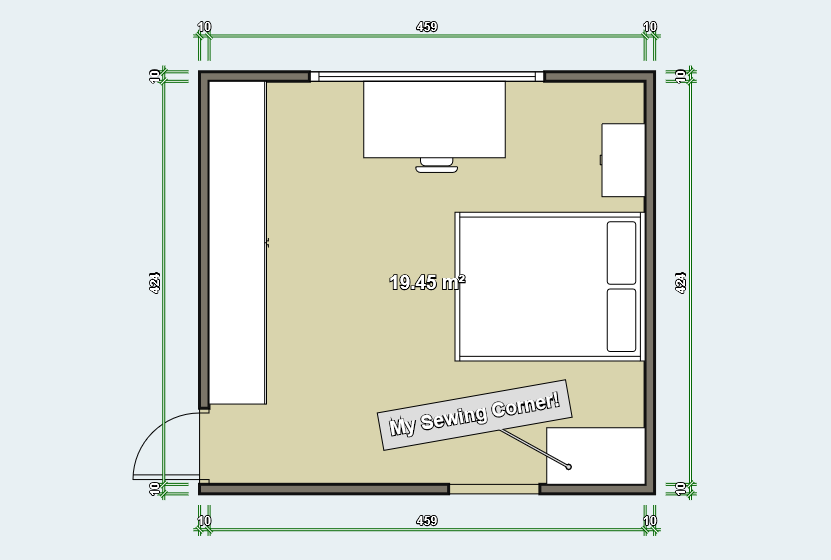
My bedroom sewing station setup
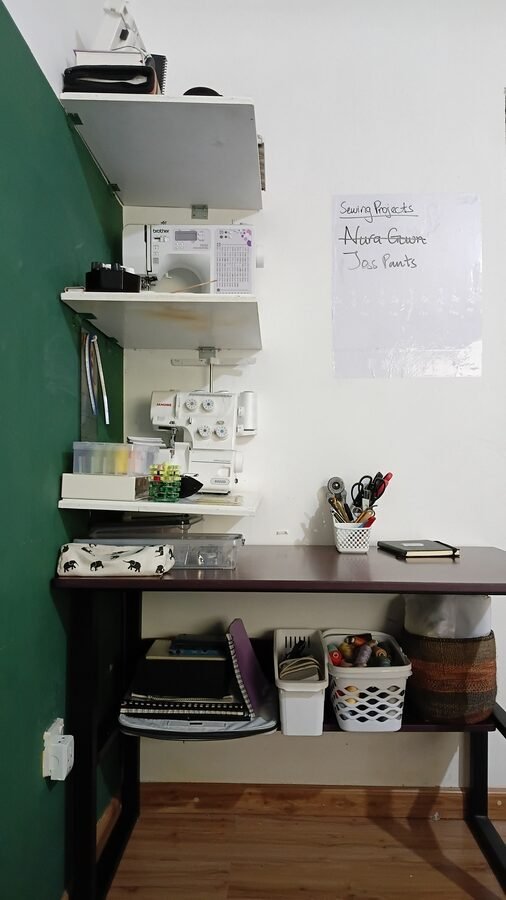
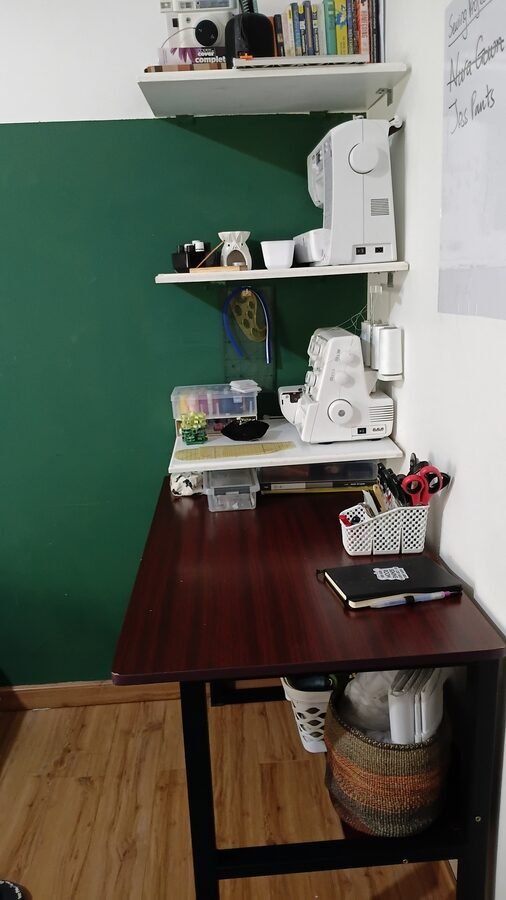
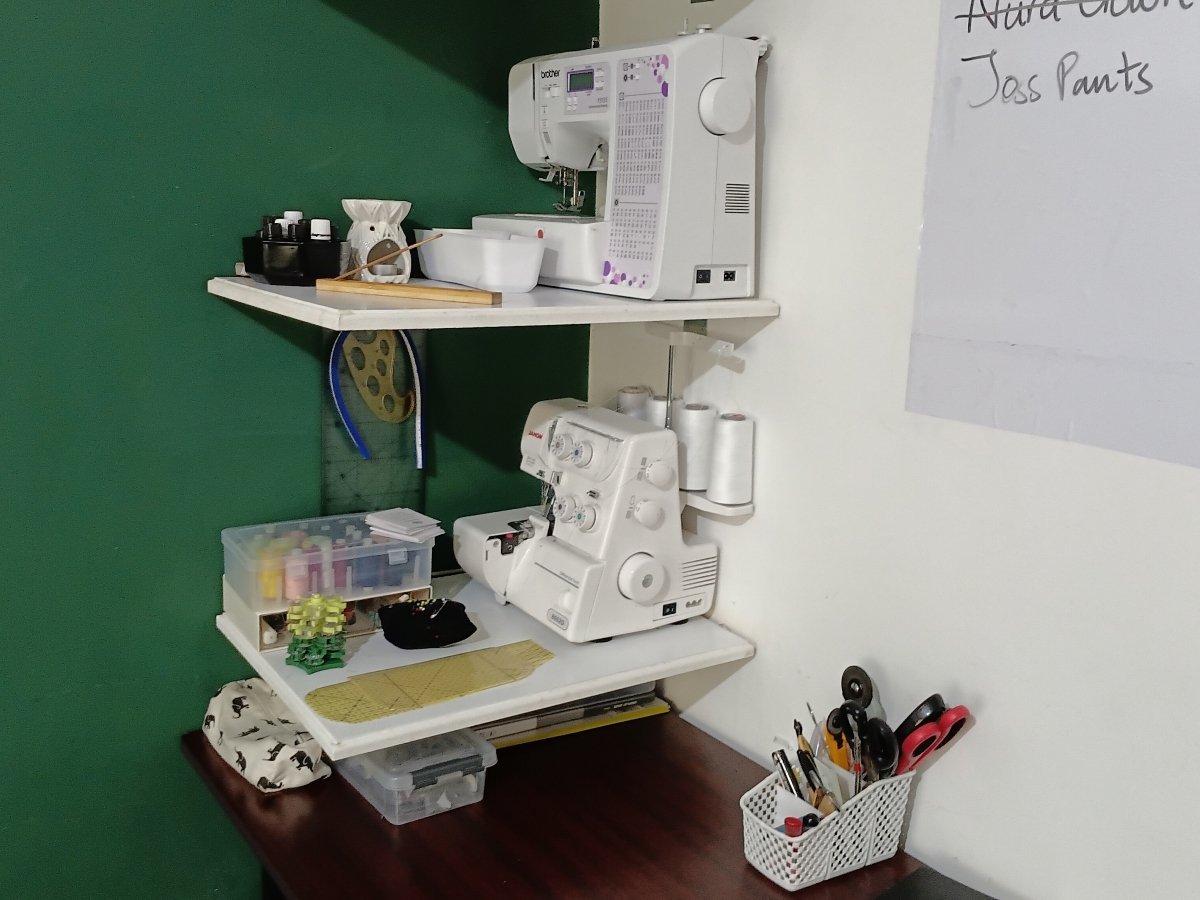
My sewing station consists of a table and three MDF shelves fixed to the wall in the corner, spaced at equal heights. Between those shelves and the small table sitting underneath, I have managed to fit in all the stuff I need on hand when sewing. It’s not the most ‘aesthetic’ sewing space but it works really well for me!
The shelves above my sewing table
The top shelf holds stuff that is not sewing related like books, my instant camera and other little things.
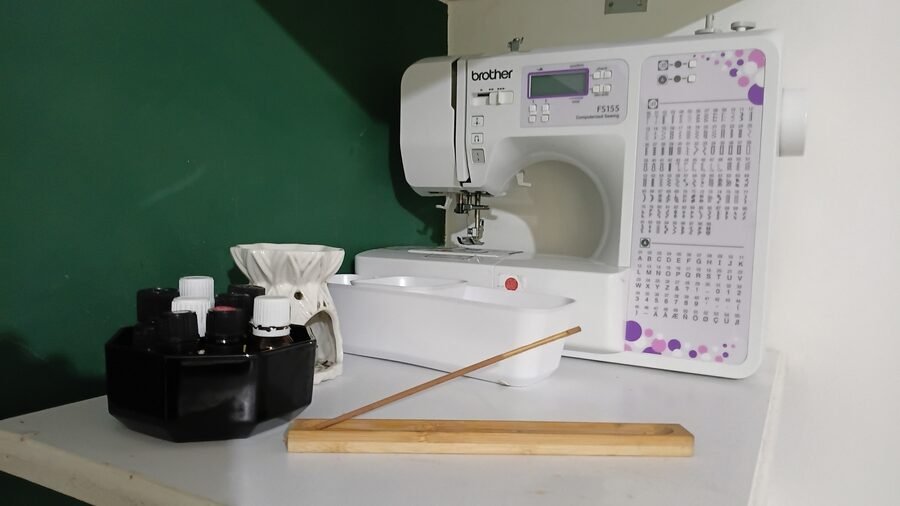
Now the second shelf is where I store my sewing machine. This is the computerised FS155 sewing machine by Brother (I really need to sew a machine cover for it though). I also have my incense sticks, essential oil burner, and a few miscellaneous sewing items up there.
The third, bottommost shelf, holds a lot more of my stuff. Here, my serger (Janome 8002D), thread case, bobbin tower, pin cushion and tailor’s ham (sometimes) live, along with various sewing tools and my sewing affirmation cards.
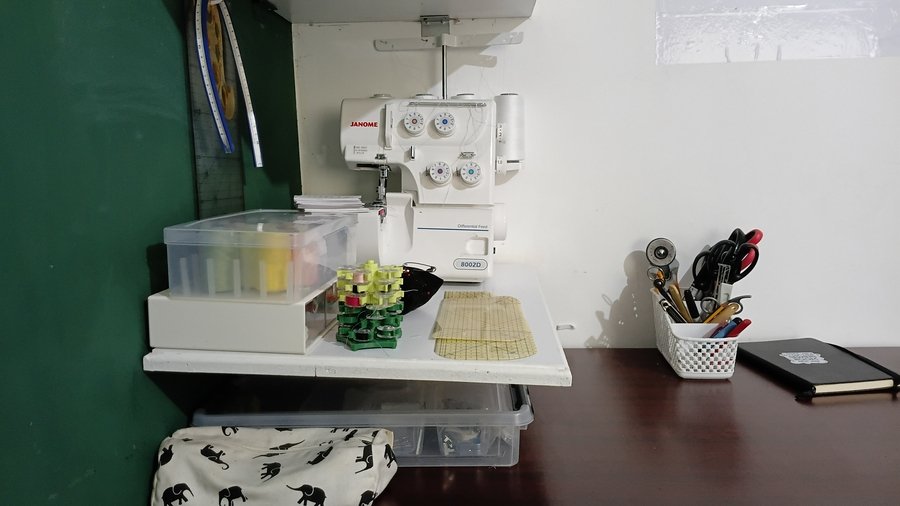
My serger can’t fit with the thread guides fully extended, so I have to lower them, which is less than ideal (I also need to sew a cover for it 😅). One of my favourite hacks for a small sewing space is to use hooks for storage. On one of the walls of the third shelf I have a hook where I hang my clear Olfa 15 x 30 cm ruler, a small yellow curved ruler, and a flexible ruler.
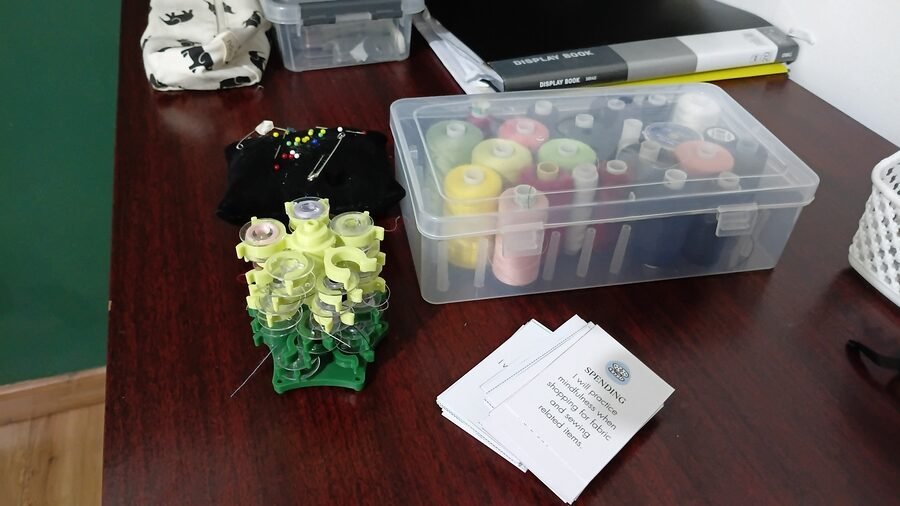
Above is a close up of the stuff that’s on my third shelf. Here we have my bobbin tower which is one of the most handy storage sewing organisers. I have a thread holder box that stores individual spools of thread. Unfortunately, it has a height of about 6.5 cm and can’t store slightly taller threads. Fortunately, it fits my neutral, most used colours of thread like white and black. I also have my deck of 48 sewing affirmations cards that I pull out whenever I need a bit of encouragement.
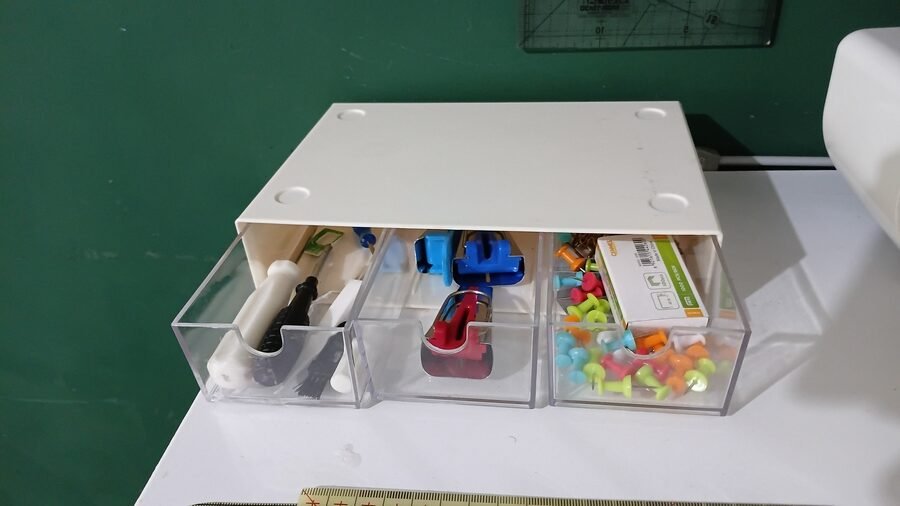
Also on that shelf is a small storage box with three tiny drawers: one for screwdrivers and machine cleaning brushes, one for bias tape makers, and one for miscellaneous items like pins and staples.
My sewing table
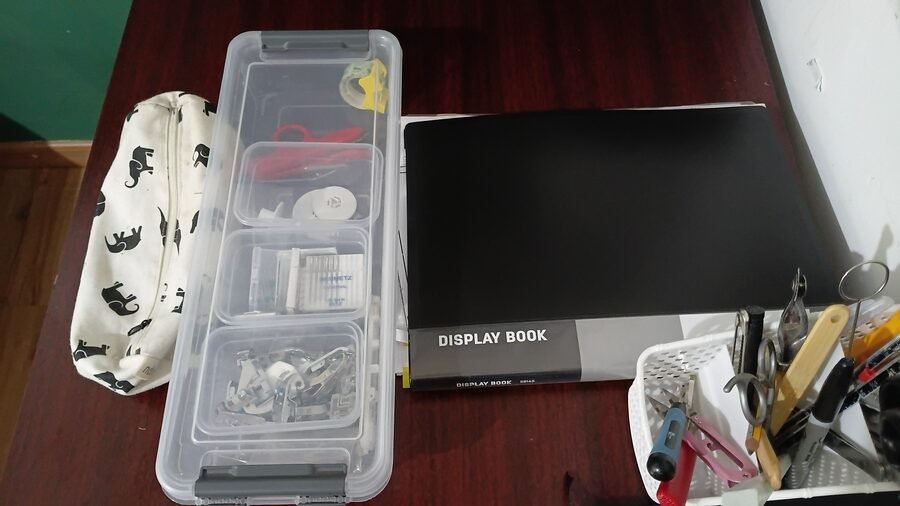
If you look at the full view image of my third shelf, you’ll notice a space about 5 in tall between the shelf and the table beneath it. I use this to store small sewing patterns that I put in pocket files, my pencil case for my marking tools, pencils and pens, and one very important storage container.
This is compact DIY storage solution that has tiny individual containers inside it (these were bought separately). Here I store my rotary cutter blades, sewing machine feet, needles, as well as sewing machine and serger accessories when not in use.
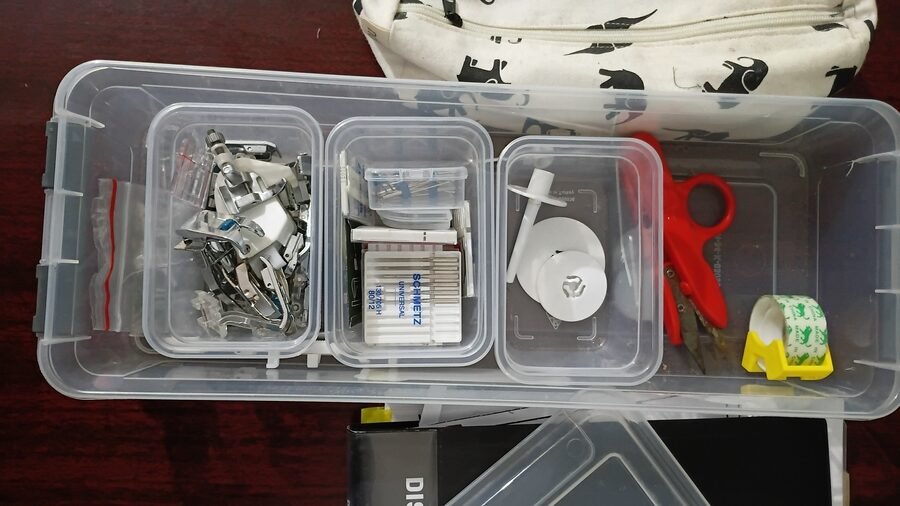
Now, the rest of the table surface I try to keep as clear as possible because I also use it for cutting fabric. The only things I leave there are my notebook and this three-compartment storage caddy.
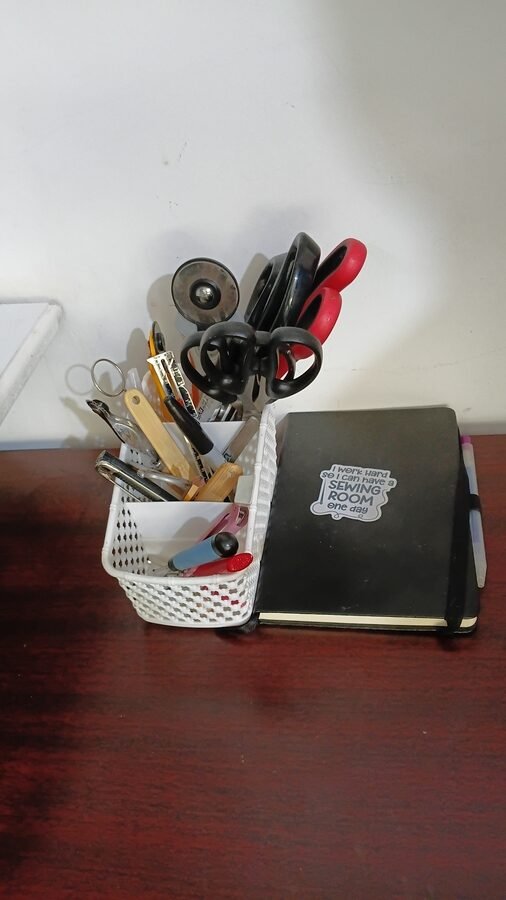
The tallest compartment holds my cutting tools: rotary cutters, scissors, and fabric shears. The middle one holds shorter tools like my tracing wheel, loop turner, point turners, and tweezers. The smallest compartment at the front holds my thread snippers, seam rippers, bodkins, and other tiny items I need to grab quickly. I love, love, love this caddy, because the different height compartments make everything easy to grab.
Ps: Check out my blog post about 5 simple inexpensive sewing tools that will change your sewing game.
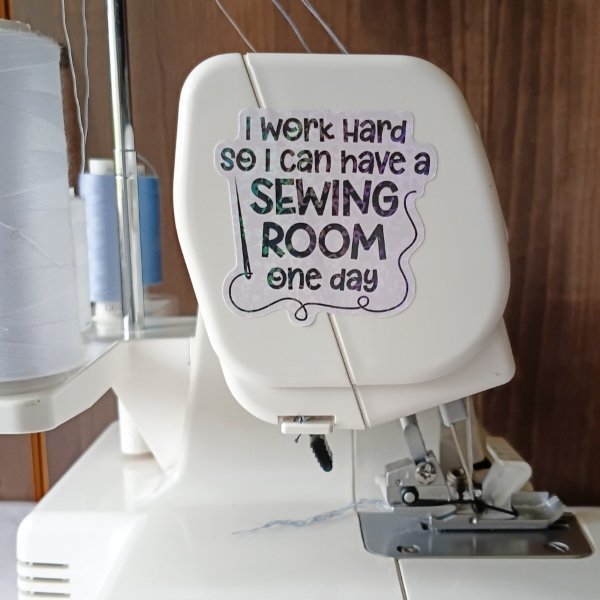
Oh and the sticker on my notebook says, ‘I work hard so I can have a sewing room one day’. I designed it and you can get the design on various kinds of stationery at my Redbubble store.
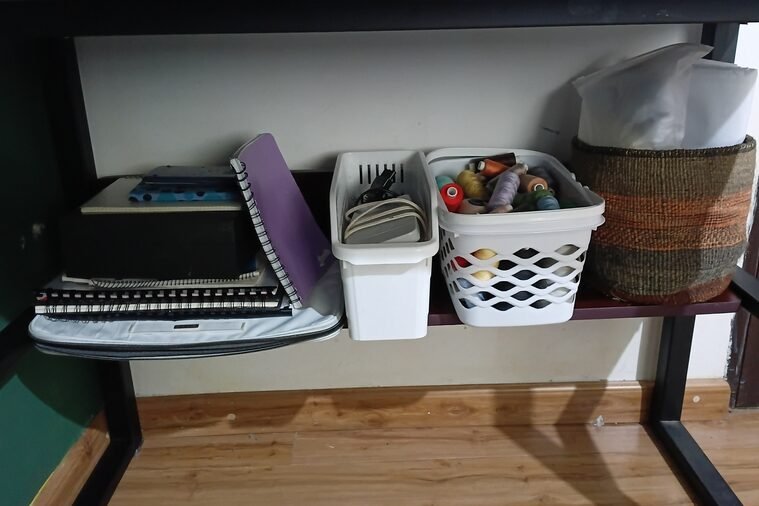
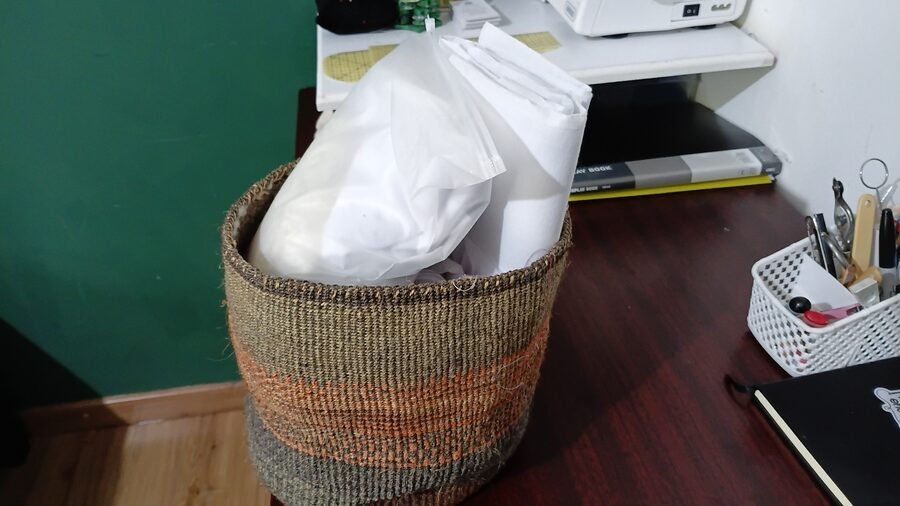
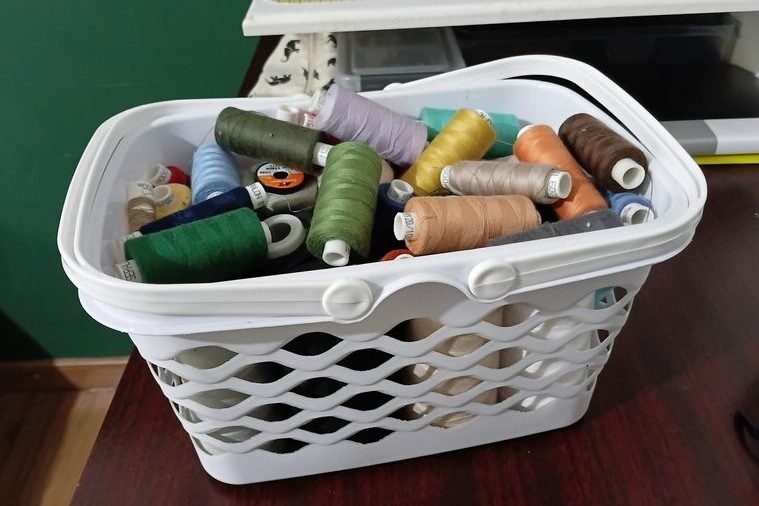
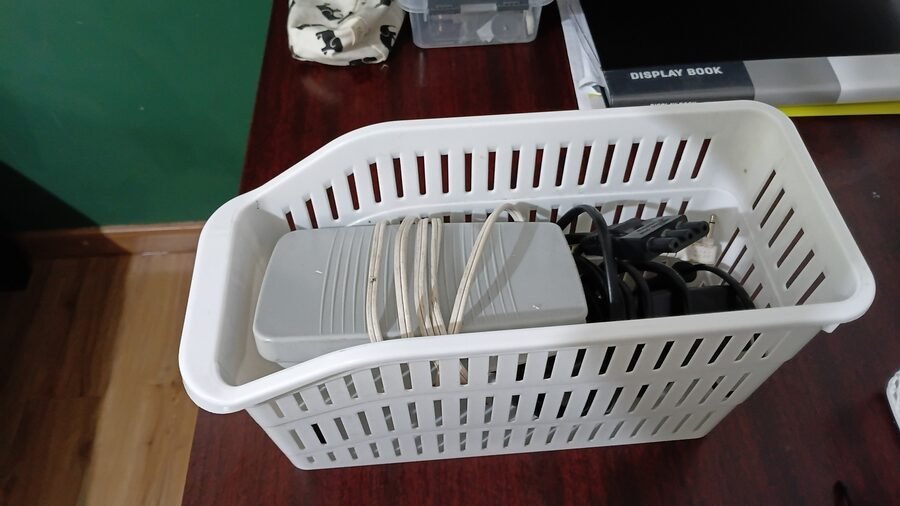
Though my table is tiny, it has a built in shelf that gives me more storage space. On this lower shelf I store my sewing machine cables, tall-but-small thread spools, serger thread cones and a woven basket with all of my interfacing and stabilisers.
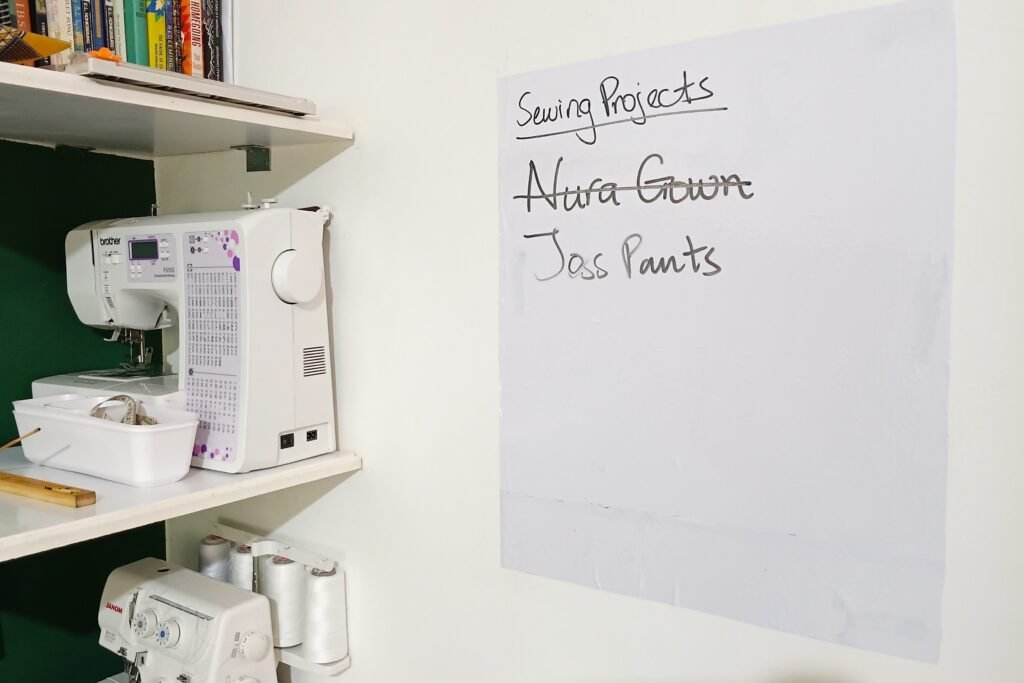
On the wall above the table I have a whiteboard sticker, which is basically a large adhesive roll with a whiteboard surface that you can cut to size depending on how much you get. I use it to write down my current sewing projects and any ideas that come to me mid-session. I have ADHD, and having things visible where I can see them makes a real difference to how I work.
Small sewing space storage solutions
Thread: In an ideal world, I’d have a large pegboard with all my sewing thread but for now things need to be compact. My best recommendation is to get thread boxes that have individual spaces for each spool of thread. But if that’s not possible, just arrange your thread in a small basket, container or carton like I’ve done for my larger threads.
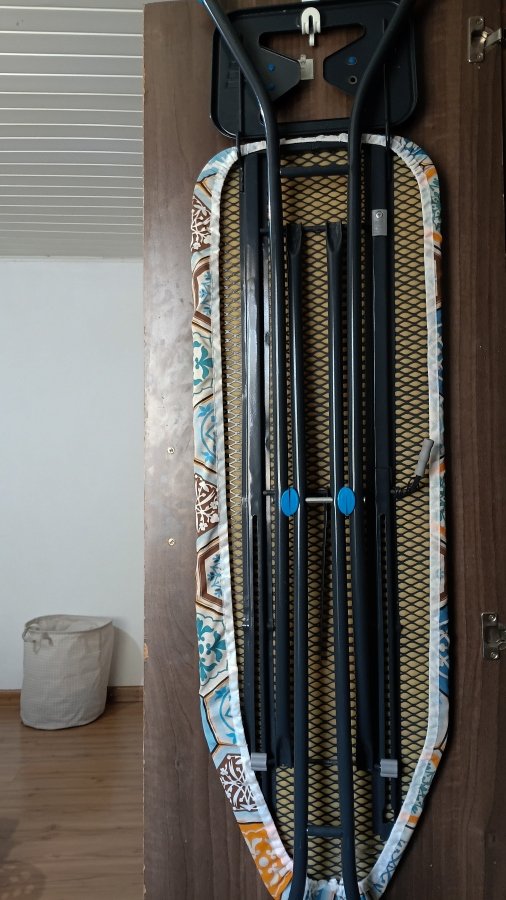
Pressing station: It do not have a permanent ironing set-up; my ironing board lives separately on an over-the-door hook on one of my wardrobe doors and my iron in my wardrobe. I like this set up as it keeps everything out of sight but still easily accessible. I just pack and unpack my stuff whenever I need it.
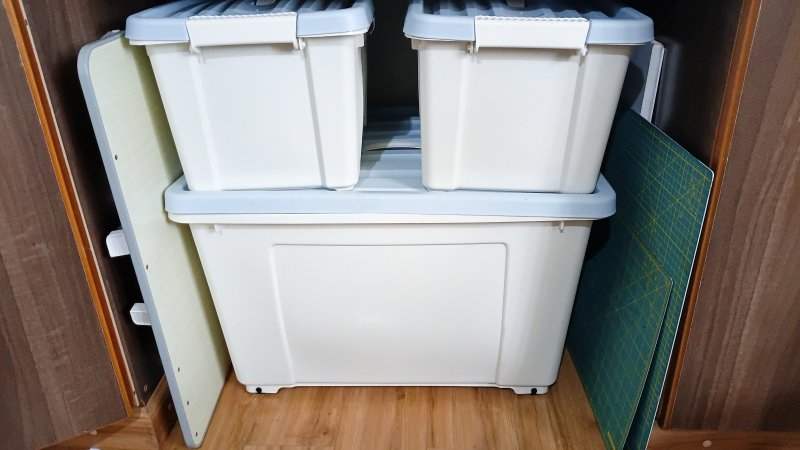
Fabric storage: My fabric stash is the one thing I have not fully integrated into the sewing corner itself. I have three large opaque storage boxes, one big one and two smaller ones on top that I keep under the dressing table that is built into my wardrobe. These store the entirety of my stash and also prevent me from hoarding more fabric that I don’t have room for. The boxes aren’t a total eye sore because they’re opaque.
Cutting mats: Standing alongside my fabric storage boxes are my 2 cutting mats. These are the OLFA 18″ x 24″ and 12″ x 18″ mats that are easy to store, even behind a door.
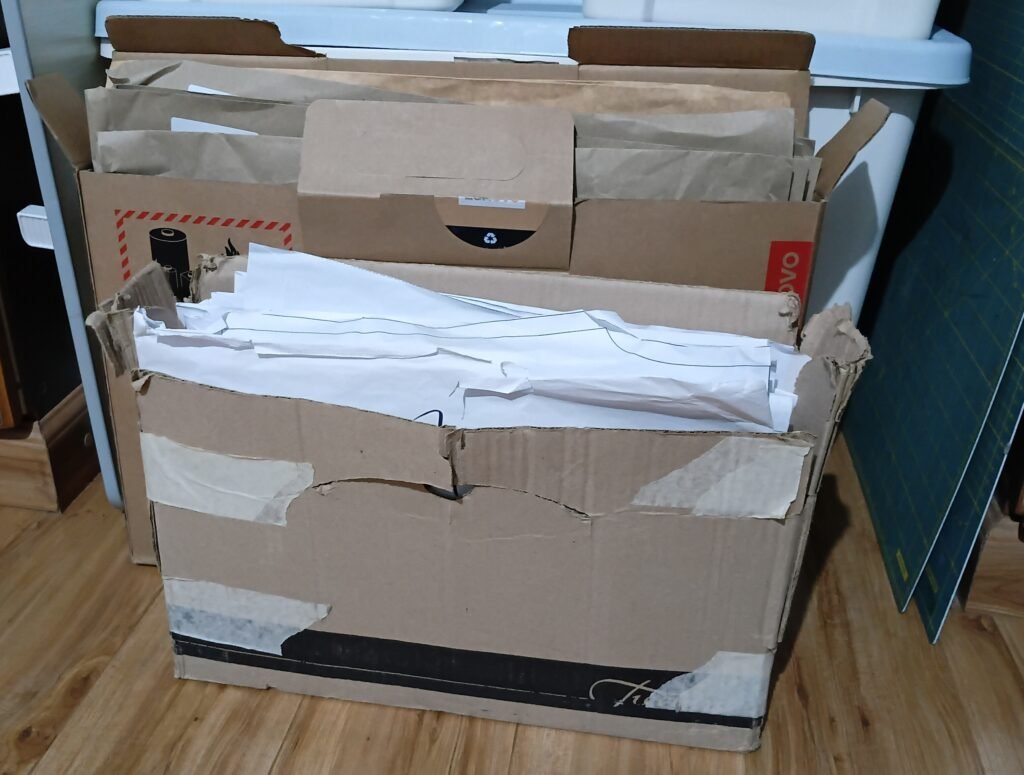
Pattern storage: One thing I still have not perfected is the storage for garment sewing patterns. For now, I store my patterns into labeled envelopes and stash them in the cartons below. I hide these in my wardrobe as they are so unsightly.
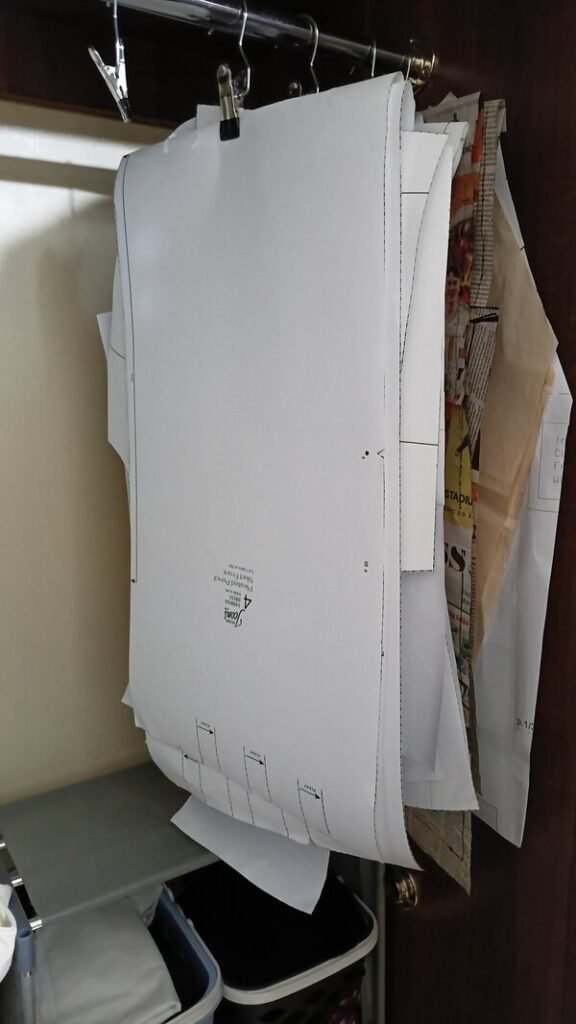
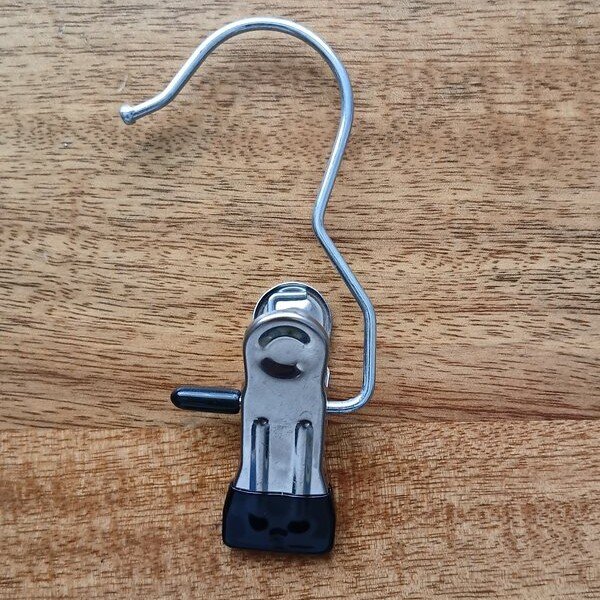
Update: I found a good storage solution for my large sewing patterns! I’m using these little hanger clips and hanging them in a wardrobe where there’s rail space.
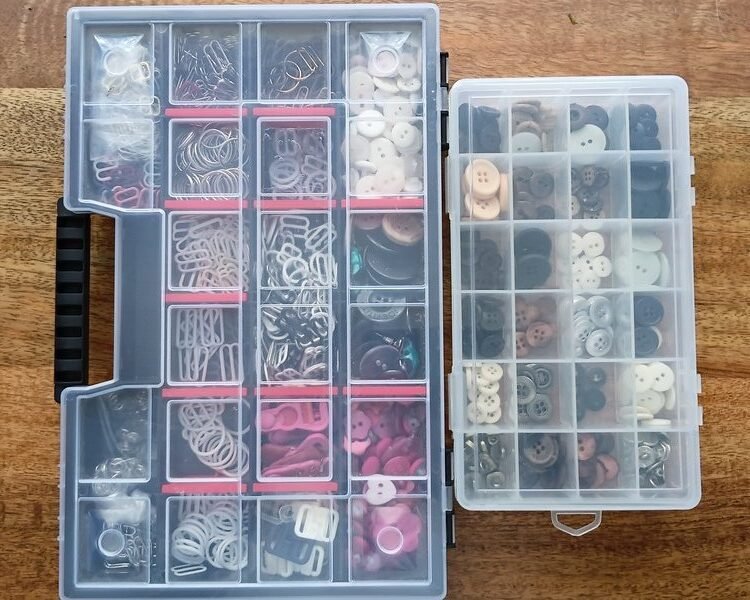
Other findings: I store my buttons, rings, sliders, snaps and other small notions in adjustable compartmentalised organiser boxes. You can find these in the tools section of most stores.
The challenges of sewing in a bedroom
Sewing in one’s bedroom comes with its many challenges. Every time I sew, my room looks like a tornado run through it. There are loose threads and fabric scraps everywhere. I suppose I could do a better job of tidying as I sew but that’s just a habit I haven’t been able to implement.
The bedroom is supposed to be a place of rest but when it doubles as a sewing space it can be hard to delineate your hobby from your everyday life. I do however tidy up properly after my sewing sessions and make sure to pack up my ironing board, cutting mats and sewing machines. If it’s the weekend, then I just do minimal tidying up and resume sewing the next day.
There are also storage problems I have not solved yet, and I think it is important to say that out loud. Like I mentioned, sewing pattern storage is a huge issue for me. I do hope to buy a projector some time in the future so that I don’t have to deal with so much paper clutter.
Making your bedroom sewing station work for you
I love the following quote by Sharyn Squier Craig in her book Designing New Traditions in Quilts:
“I am lucky enough to have an entire room for my sewing area, but you do not need a whole room for your sewing area to be organised.”
I appreciate that she acknowledges that not everyone has the space to have a large or permanent sewing area. To finish up this blog post here are a few quick tips.
Work with what you have. A lot of my storage came from the supermarket or was repurposed from something else. The woven basket was a gift. The containers were picked up over time. You do not need to go out and buy a matching set of anything to have a functional sewing space.
Keep your work surface clear. My table is tiny, and the only reason it works as a surface is because I do not let things pile up on it permanently. Try to pack your machines away, return tools to their containers, and you will be amazed how well your table will serve you.
Use vertical space. Use vertical space. If you have wall space, try make use of it. It helps make your sewing station more efficient and less crowded.
Practice gratitude. The fact that I have been able to carve out a semi-permanent corner for sewing in my bedroom is something I do not take for granted. A lot of people are packing and unpacking their entire sewing setup from scratch every single time they want to sew. Every single space you get to sew in is worth appreciating.
A little something for your sewing space
I have a deck of 48 printable sewing affirmation cards, split into eight themes with six cards per theme. One of those themes is specifically about sewing space, and I actually keep those cards on my third shelf where I can see them. A few from that set feel very fitting for this post:
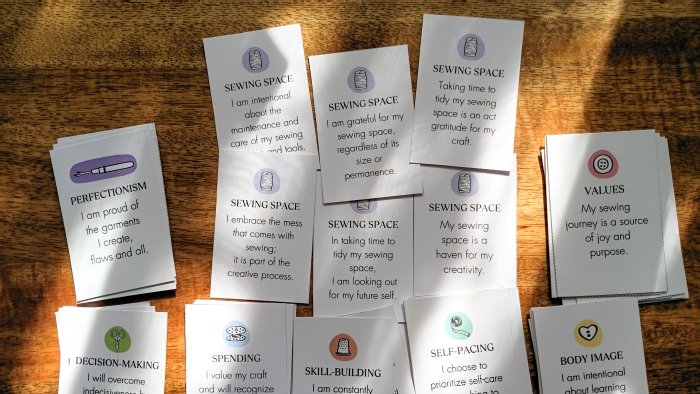
If those resonate with you, you can find the full deck here. They are printable, so you can have them wherever you sew, whether that is a dedicated sewing room or a corner of your bedroom.
I would love to know: where do you sew? Are you a fellow bedroom sewer, or have you managed to carve out a different kind of space? Let me know in the comments below.
Happy Sewing!